
Functionality & Power
Power
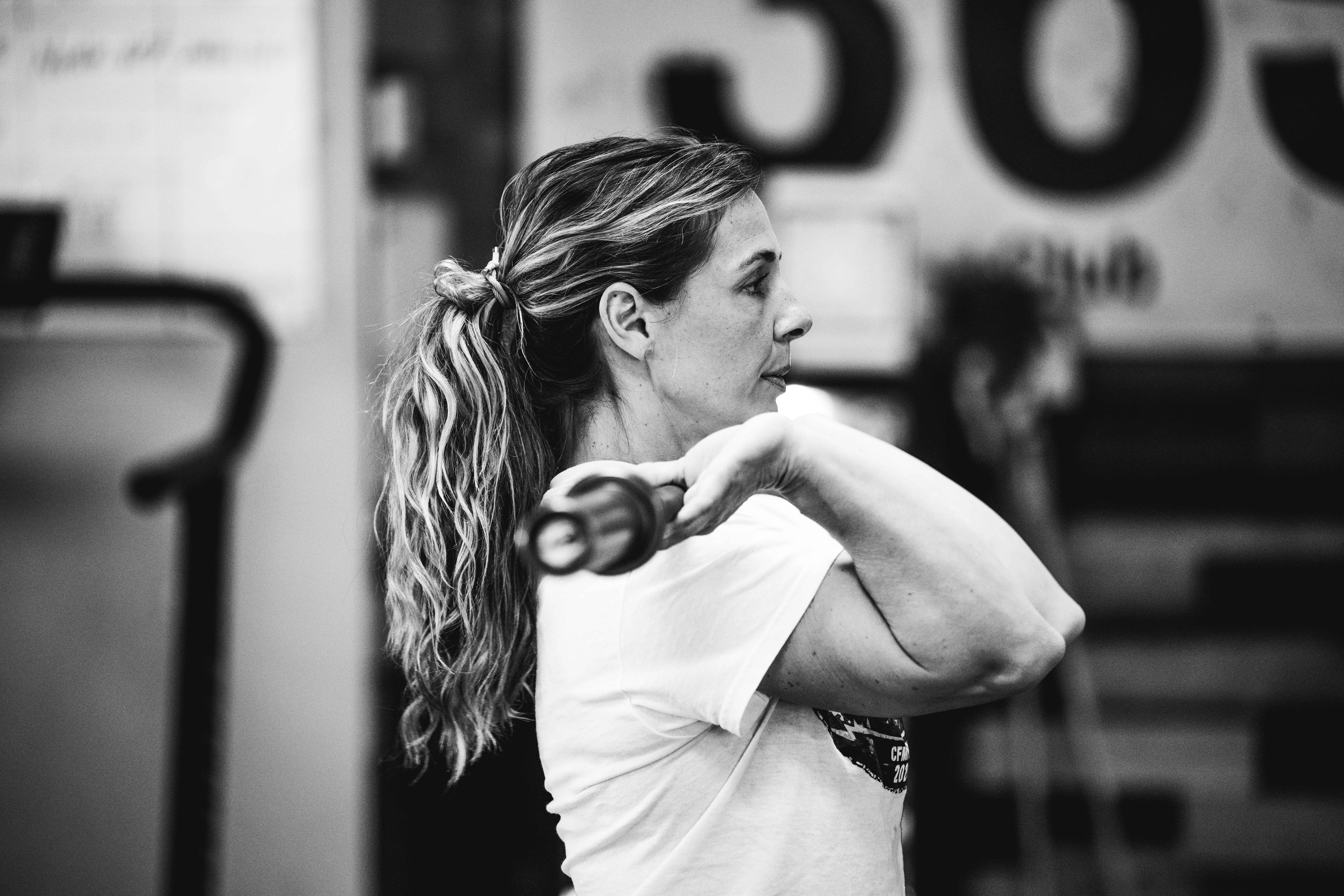
Power is defined as the “time rate of doing work.” It is widely accepted that in athletics, speed is King. In a CrossFit gym, “power” is the undisputed king of performance. Power is, put simply, “hard and fast.”
Jumping, punching, throwing and sprinting are all measures of power. Increasing your ability to produce power is necessary and nearly sufficient to elite athleticism.
Additionally, when we talk about power, we define it as intensity. Through our training methodology, intensity has been linked to nearly every positive aspect of fitness. There are measurable increases in strength, performance, skeletal muscle mass and bone density and they all arise in direct proportion to the intensity of the exercise performed by an individual. When we consider intensity is defined as power, it is important to note that power is one of the four defining characteristics of an effective CrossFit program. It is necessary, and while it is relative, power must be ever-present in CrossFit training.
Cross-Training
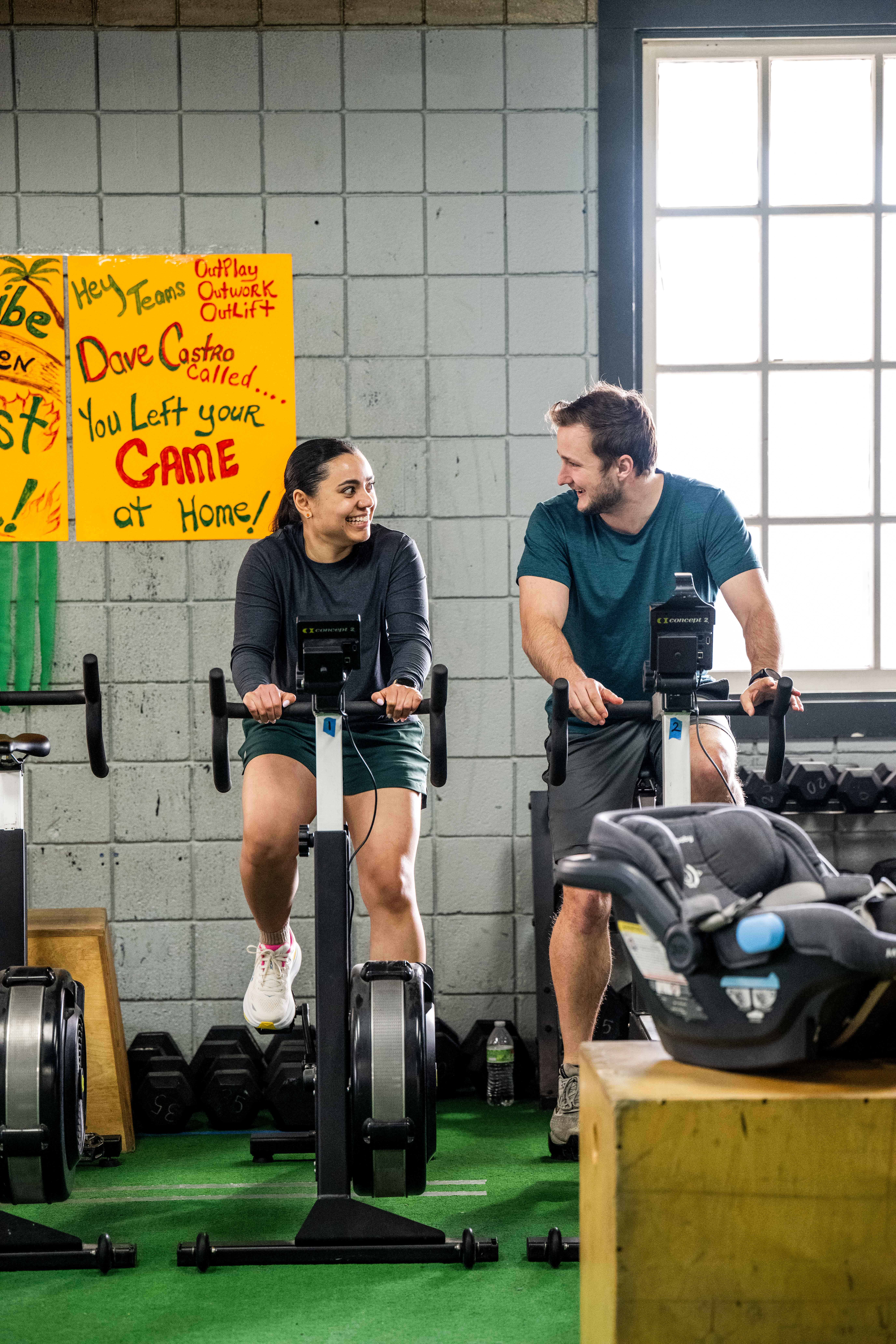
Cross-training is typically defined as participating in multiple sports. At CrossFit, we take a much broader view of the term. We view cross-training as exceeding the normal parameters of the regular demands of your sport or training. The CrossFit program recognizes functional, metabolic and mixed-modal cross-training. Simply put, we don't only do 30-60 minute cardio sessions. We don't only stretch and work on flexibility. We also don't spend all of our time lifting weights and only lifting weights. We do everything, and that is what separates us. By expanding the scope of the exercise modalities we expose ourselves to, we reap the rewards from all that these modalities of exercise have to offer. That is, we regularly train past the normal motions, metabolic pathways and modes or sports common to the athlete’s sport or individuals exercise regimen. We are unique and again distinctive to the extent that we adhere to and program within this context.
If you remember the CrossFit objective of providing a broad-based fitness that provides maximal competency in all adaptive capacities, cross-training, or training outside the athlete’s normal or regular demands, is a given. The CrossFit coaching staff had long ago noticed that athletes are weakest at the margins of their exposure for almost every measurable parameter. For instance, if you only cycle between 5 and 7 miles at each training effort, you will test weak at less than 5 and greater than 7 miles. This is true for range of motion, load, rest, intensity and power, etc. CrossFit workouts are engineered to expand the margins of exposure as broad as function and capacity will allow. Cross-training is one of the four defining themes of the CrossFit program.
Functional Movements
Movements that mimic motor recruitment patterns can be found in everyday life. Others are somewhat unique to the gym. Squatting is standing from a seated position; deadlifting is picking any object off the ground. They are both functional movements that are unavoidable in normal life. Leg extension and leg curl both have no equivalent in nature and are in turn non-functional movements. The bulk of isolation movements are non-functional movements. By contrast, compound or multi-joint movements are functional. Natural movement typically involves the movement of multiple joints for every activity.
Example. Assuming you are seated. Stand-up, walk across the room, lay down on the floor and then get up, walk back to your chair and sit-down. The assignment? Pay attention to all of the joints and body parts that are involved in this process. That is why we choose functional, multi-joint movements over machine or isolation movements.
The importance of functional movements is primarily twofold. First, functional movements are mechanically sound and therefore safe. Second, they are the movements that elicit a high neuroendocrine response. The hormonal stimulus that comes from these movements delivers results, and quickly.
CrossFit has managed a stable of elite athletes and dramatically enhanced their performance exclusively with functional movements. The superiority of training with functional movements is clearly apparent with any athlete within weeks of their incorporation. This is true whether the individual is a high-level athlete, mother of 2 or grandparent trying to stay strong and active to maintain their freedom and quality of life.
The soundness and efficacy of functional movement is so profound that exercising without them is by comparison a colossal waste of time. For this reason, functional movement is one of the four dominant CrossFit themes.